
At past General Conferences, delegates wanting to speak in a plenary session raised a card and hoped the presiding bishop called on them as opposed to others with cards held high.
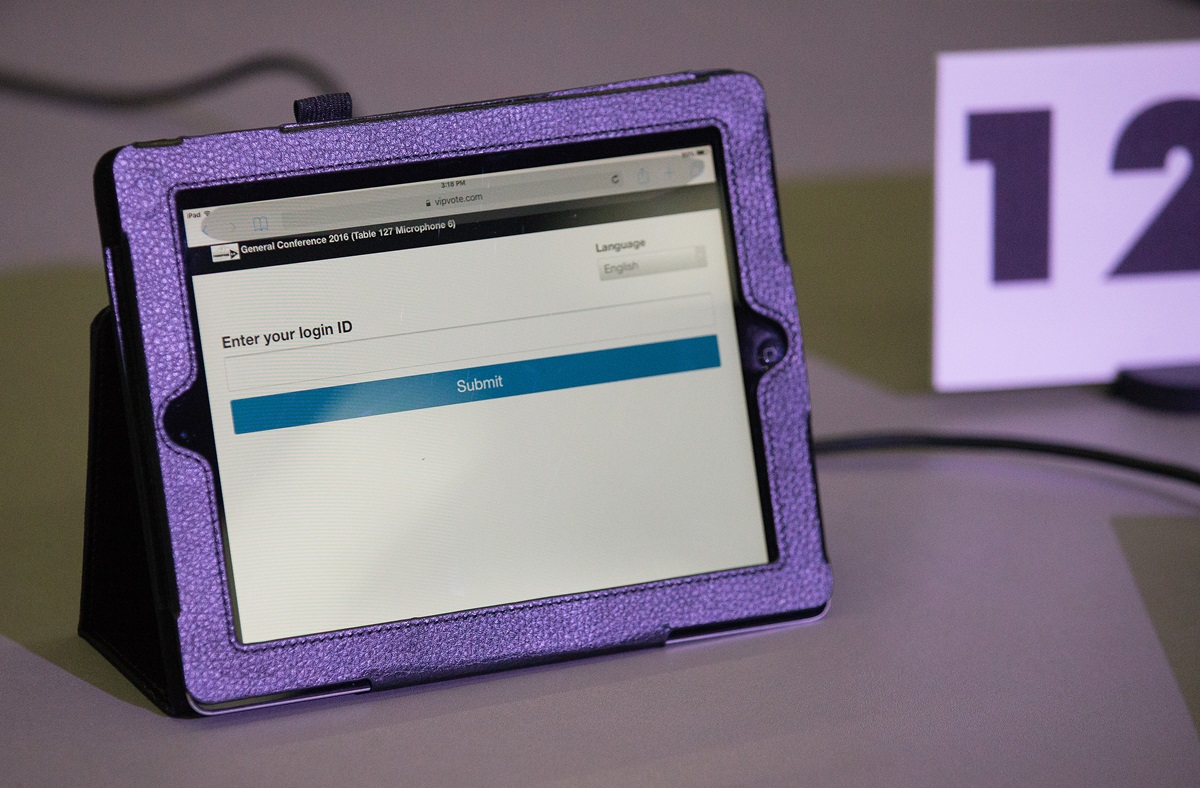
But at General Conference 2016, delegates are supposed to use a tablet computer to register their desire to speak, and some African delegates aren’t happy about it.
“This is a new technology to me, and it’s like I’m going to be disfranchised,” said the Rev. John Auta, a clergy delegate from the Central Nigeria Conference.
At this General Conference, underway through May 20 in Portland, delegates will sit at round tables during plenary sessions. The delegates at each table will share one tablet computer for relaying a request to be recognized.
But the process of quickly doing that, including tapping in one’s delegate number, will be cumbersome and mistake-prone for those who aren’t yet computer-savvy, said the Rev. Eli Sule Yakku, also of the Central Nigeria Conference.
“We are not technologically oriented,” Yakku said. “Most of us will be too slow for what is expected.”
African delegates anxious
The Rev. Joseph Ndala Mulongo, a North Kantanga Conference delegate and member of the Commission on General Conference, said he’s aware some African delegates are anxious.
“For them, they needed more training and practicing,” he said.
Bishop Warner H. Brown Jr., president of the Council of Bishops, said he has heard the Africans’ “digital divide” concerns and has relayed them to the Commission on General Conference. He’s been assured accommodations will be made, as needed.
He noted that bishops also have had to be trained on how to use a computer queue to decide who gets recognized.
“This is new technology, so there’s some level of anxiousness about it from all of us,” Brown said.
Brown pointed out that it’s a challenge to get recognized in a big auditorium by waving a card. Some delegates are better at it than others.
“Culturally, some people were not as aggressive in seeking recognition and were overlooked,” he said.
The tablet computer approach needs to be given a chance, he feels.
“If it works, it will probably make our access more equal than it was before,” Brown said.
Return to card-waving?
The first hours of General Conference went to discussion of the rules governing the law-making assembly. Rudolph Merab, a delegate from Liberia, supported deferring approval of the rule that would allow for tablet computers to be used in gaining recognition from the presiding bishops.
"We from Africa are a bit technologically challenged," Merab said.
But delegates ultimately voted to approve all but one of the proposed rules, meaning the tablets will be used.
Retired Bishop F. Herbert Skeete is sympathetic to the Africans who are worried.
“I think they will be at a disadvantage, especially if you have persons who are coming without any skills in the technology,” he said. “Things will be moving so fast, it will be hard for them to catch up.”
Central Conference delegates have been given their own tablet computers for online access to the Daily Christian Advocate and other relevant documents, and that has been welcome, said the Rev. Alfred Njau, a Tanzania Conference delegate.
He’s a tablet computer owner, and is comfortable with using one to try to gain floor recognition. He feels less computer-savvy delegates can get the hang of it, if technical help is nearby when problems arise.
Some delegates complained in the early hours of General Conference that the tablet computer at their table wasn't working. Officials of the Commission on General Conference said backups would be available.
Hodges, a United Methodist News Service writer, lives in Dallas. Contact him at (615) 742-5470 or newsdesk@umcom.org
Like what you're reading? Support the ministry of UM News! Your support ensures the latest denominational news, dynamic stories and informative articles will continue to connect our global community. Make a tax-deductible donation at ResourceUMC.org/GiveUMCom.


