Key points:
- The United Methodist Church can be a place for all who want to be part of the broad middle, carrying out Jesus’ mission in the world.
- Six principles can help the denomination live into a future that reflects “the heart of United Methodism.”
- The church is at a moment of decision, when it can show the world the difference that Jesus makes.
Commentaries
I long for The United Methodist Church that invited me into a life-changing relationship with Jesus Christ as Savior and Lord to do the same for others.
But will it?
Yes, but only if we are serious about proactively inviting, welcoming, including and valuing the millions of moderates and traditionalists around the globe and in the United States who are still part of The United Methodist Church. The reason is simple. Moderates and traditionalists need — and are needed in — The United Methodist Church.
There will be some who will dismiss this as an attempt to keep the institution alive, a compromise that tries to keep everyone happy or a Big Tent in which people simply co-exist. It is none of these. Rather, it is a United Methodist Church that reflects the “heart of United Methodism.”
We will welcome everyone, yet it will not be a church for everyone. There will be some for whom it is not conservative enough and others for whom it is not progressive enough. But it will be exactly the place for all who want to be part of the broad middle, long for the fighting to cease and desire to focus on carrying out the church’s mission in a world that desperately needs to be transformed by Jesus’ love.
Hoping it happens is not enough. We must move beyond the usual aspirational feel-good talk and enter into deep conversation about six concrete principles. It may be hard and painful at times.
But what’s at stake makes it worth it.
Principle 1: The United Methodist Church will embrace Jesus’ imperative for unity articulated in John 17. This can become a reality if all United Methodists actually do what Paul says in 1 Corinthians 12:1-3: accept at face value the fact that when someone says, “Jesus is Lord,” it’s only because he or she has been enabled by the Holy Spirit to do so. If it’s good enough for the Holy Spirit, it ought to be good enough for us!
Principle 2: Our church will intentionally welcome moderates and traditionalists, along with their beliefs and convictions. At the same time, moderates and traditionalists need to respect the attitudes and opinions of progressives and centrists in the same way they wish to be respected.
Principle 3: We will stop weaponizing orthodoxy and, instead, join together to let the rich trove of orthodoxy robustly form us. The Wesleyan emphasis on class meetings, bands, the means of grace and holy conferencing provide a path that moves more fully into the holiness of heart and life that is the hallmark of mature Christians. Sadly, there will be United Methodists who are outliers when it comes to Christian orthodoxy. This must and will be dealt with. When faith begins to resemble Unitarianism or new age spirituality or some expression of fundamentalism or Christian nationalism, it must be addressed.
Principle 4: The United Methodist Church must successfully address matters of human sexuality if the “heart of United Methodism” is to hold. This will not be accomplished by focusing on which particular stance the church should embrace. It will happen only if the denomination crafts a new and faithful way to live with our significant differences.
The United Methodist Church currently is accountable to The 2016 Book of Discipline as amended by the 2019 General Conference concerning matters of human sexuality. This may well change at some point in the future because a new dynamic is rapidly emerging, at least in the United States. While many moderates and traditionalists continue to embrace their current beliefs, they also are increasingly willing for others in the denomination to address human sexuality in a different way. They just ask that nothing be mandated for them or their congregation that forces them to act contrary to their conscience. This is why “may” and not “shall” language is essential.
It is wrong, perhaps even sinful, to assume that finding something that works in the U.S. context will settle the matter for a church that is truly global. United Methodist leaders in western Europe and the United States will have to enter into a relationship with these brothers and sisters to jointly explore what the church will do about this and a multitude of other matters if a new form of colonialism is not once again to be imposed. This may well result in a new way of being the globe-embracing United Methodist Church that resembles the Connectional Conference Plan presented at the 2019 called session of General Conference or the more recently proposed Overlapping Regional Conference Plan.
Principle 5: We will be uncompromisingly connectional, but the connectionalism as we know it will be turned upside down. It will no longer be imposed structurally from the top down as codified in The Book of Discipline, but will grow organically from the ground up. This is a gift to the denomination because very diverse members of local churches have figured out how to be connected through worship, study and mission at the same time our denomination is ground zero for division.
Subscribe to our
e-newsletter
Principle 6: The United Methodist Church will be shaped by our mission of making disciples of Jesus Christ for the transformation of the world. Three endeavors will be at the “heart of United Methodism”: evangelism, discipleship formation, and acts of compassion, mercy and justice. These will not merely be messaging points. We will organize our life around them. One task in particular will need to be at the forefront of our work: dismantling the sin of racism and building God’s reconciliation. Regardless of theological perspective, United Methodists will band together to address this sin that continues to eat at the soul of our life together.
So what’s next?
We can be like almost every other mainline historic Protestant denomination and simply split so that traditionalists and moderates go and progressives and centrists stay. If this is what we choose, we will get the same results as every other mainline historic Protestant denomination that has done this.
But we are at one of those kairos moments in time when we can make a choice that leads to a whole different future. We can invite the Holy Spirit to mold and shape us into the “heart of United Methodism” that truly shows the world the difference that Jesus makes. And that’s exactly what the world needs right now, even if it does not yet know it.
It’s an exciting time to be a United Methodist!
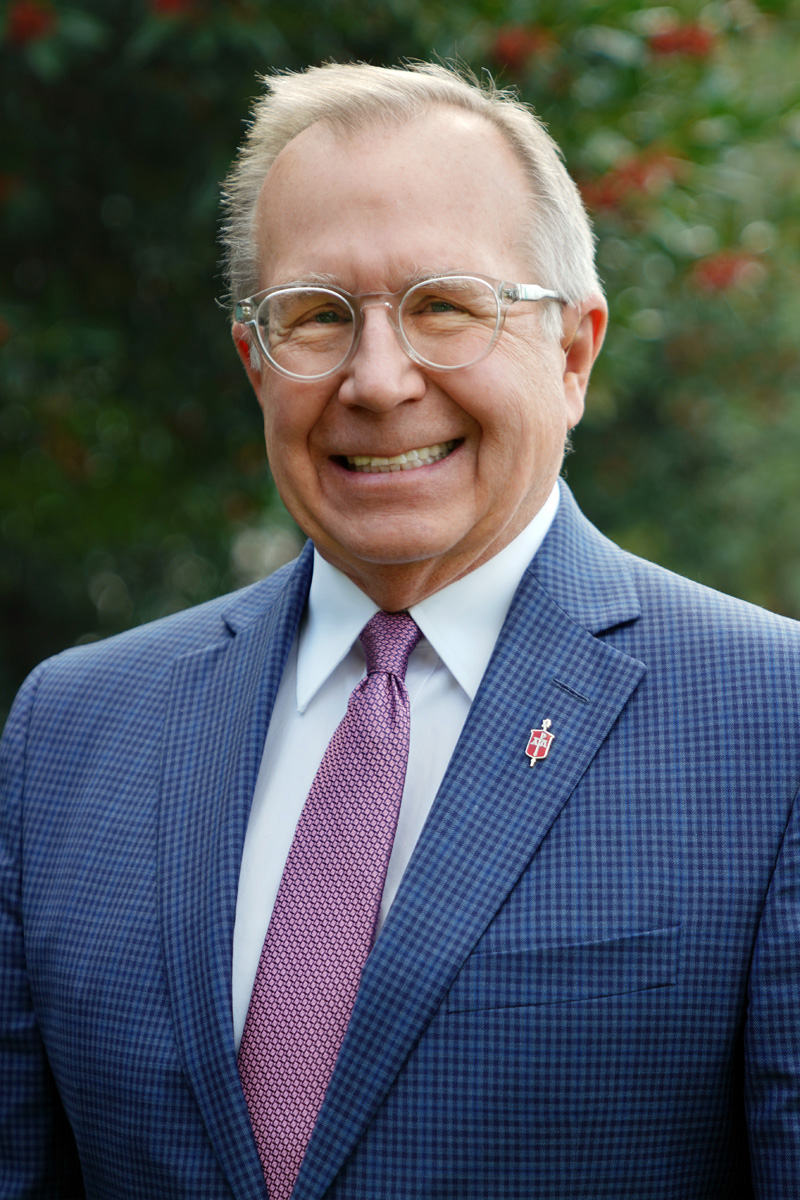
A longer version of this commentary appeared on the Arkansas Conference website. Mueller, who leads The United Methodist Church’s Arkansas Conference, will retire Jan. 1.
News contact: Joey Butler or Tim Tanton at (615) 742-5470 or newsdesk@umcom.org. To read more United Methodist news, subscribe to the free Daily or Friday (weekly) Digests.